Logistics automation
Logistics automation: freight requests without re-typing
The system reads freight requests and orders from email and other channels, extracts the route, dates, cargo details and customer, checks them and prepares the record in your TMS or ERP.
Your forwarder approves only what is unclear or breaks the rules.
- 30–45 minute call
- examples shown on your own screen
- written assessment afterwards
- Loading and unloading points
- Dates and cargo details
- Customer recognised
Processes
Forwarding work the system can take over
- Freight requests by email and other channelsstructured record in the TMS
- Customer orders as PDF or spreadsheetorder with route and dates
- CMR and delivery documentsdata matched to the trip
- Carrier invoiceschecked against the order and passed to accounting
- Customer questions about shipment statusdraft reply with data from the TMS
- Mismatches: missing date, unknown customer, different pricea task for the forwarder
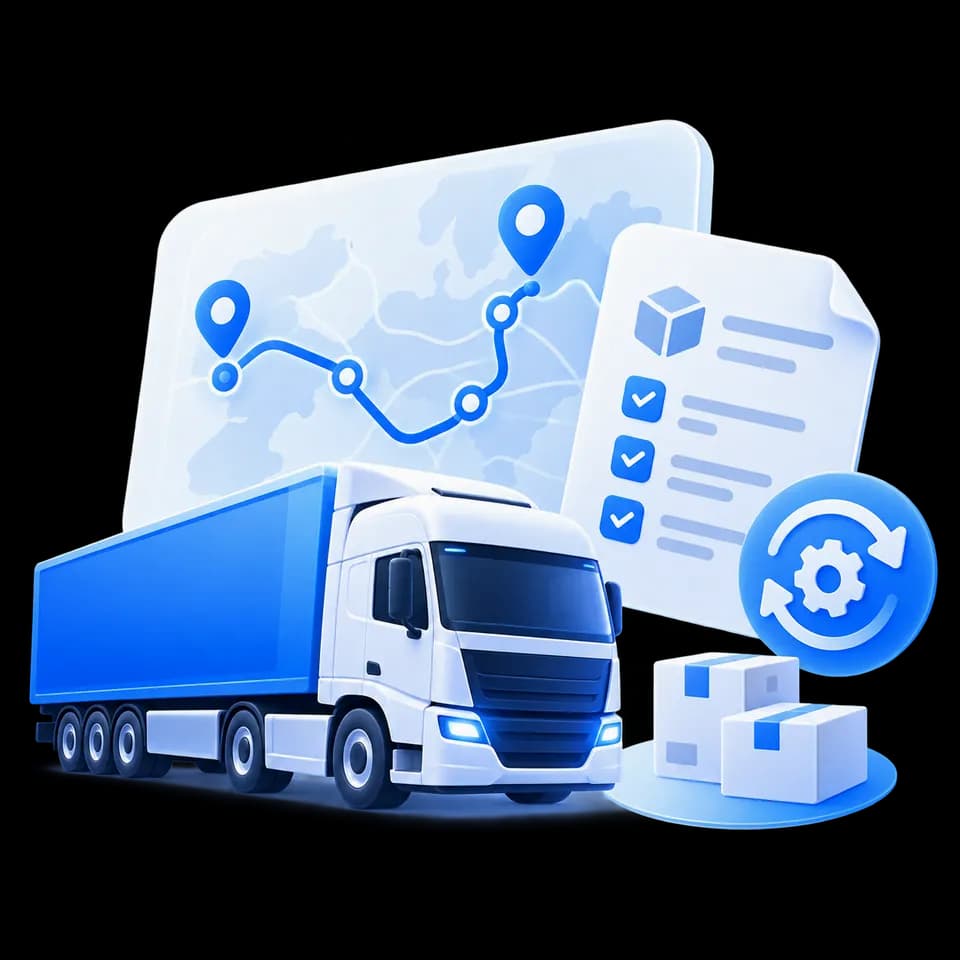
Freight forwarder: analysis of freight requests arriving by email and other channels → structured record in the TMS
How it works
From request to a record in the TMS
Request arrives
Email, PDF or spreadsheet attachment, other channels
Recognition
Route, dates, cargo, customer
Checks
Customer record, pricing, missing fields
Record in the TMS
Order or draft quote
Forwarder approves
Unclear cases wait for a person to decide
The model reads the email and attachments, the rules check the data, and your forwarder decides what is unclear. Every decision is stored, so any order can be traced back to the original email.
Your software
Your TMS and ERP stay
The system works with your TMS and ERP through their API or import. Your forwarders keep working where they work today – they just stop re-typing emails.
We use business-grade APIs that don’t train models on your data, and for sensitive processes the system can run on your own or an EU server. Data processing is agreed in the contract.
- TMS
- Business Central
- Directo
- Rivilė
Who it’s for
When it makes economic sense
For freight forwarders and transport companies where several people re-type requests, orders and documents from email into the TMS every day.
Economics decides: whether the value recovered in a year clearly exceeds the cost of the system.
If there are too few requests for the system to pay back, we will tell you in writing.
FAQ
What to know about logistics automation
- Which channels can the system take requests from?
- Shared inboxes, PDF and spreadsheet attachments, website forms and other channels whose data is available through an API or export. We decide which channels to connect first during the process review.
- Does the system send prices to customers on its own?
- No. It can prepare a draft quote from your pricing rules, but a forwarder approves and sends the price.
- Do we need to replace our TMS?
- No. Records are created in your TMS or ERP through their API or import. If there is no API, we tell you during the process review – before any proposal.
- Where do we start, and what does it cost?
- We start with a 30–45 minute process review: you show a few typical requests on your screen and receive a written assessment. The price is fixed after the review and proposal, and the first working phase is usually planned for 6–10 weeks.
- Is our data used to train AI models?
- No. We use business-grade APIs that don’t train models on your data. For sensitive processes the system can run on your own or an EU server, and data processing is agreed in the contract.
Contact
Show us how your team handles freight requests today
In 30–45 minutes we look at a few typical requests on your screen. Afterwards we tell you in writing what can be automated, where rules are needed and whether it makes economic sense.
Email
info@aiprocesai.ltPhone
+370 632 36434Location
Lithuania